
Without knowing what the future holds, we can safely say that there is one thing we will need for 2016: godliness.
To weather all of the “we’re-not-in-heaven-yet” moments that are sure to come our way this year, we will need a high dose christlikeness! When Paul thinks of his own job description as an apostle of Jesus Christ, he describes it as being called to further the “faith of God’s elect and their knowledge of the truth that leads to godliness” (Titus 1:1). At the outset of our new series on Titus (and a new year together), I want to begin with this challenge:
Many of us have goals (there is nothing wrong with having goals), but is godliness one of them? Is godliness something we aspire to as a church? Is godliness a passionate pursuit for our church? Does the truth that we believe lead to godliness? Could a biographer, 100 years from now, write as our summary: “The Church of England on Norfolk Island: A Passion for Godliness”?

Sometimes we think that progress in the Christian faith is simply the attainment of knowledge, but Paul says true knowledge leads to godliness. Right knowing produces right living.
Sometimes we can personalise sanctification to such a degree that it is all about “personal holiness”, as if godliness is something separate from the mercy, justice, charity and love that we ought to show our neighbours. Understanding good works as those things which benefit our neighbours, rather than those things which increase our inner, personal sense of “piety” (aka self-righteousness) is crucial if we ever want to make true progress in the Christian faith. What we often fail to remember is that loving our neighbour is the second greatest commandment (so it seems to me that if we want to become more like Christ, our focus, in large part, should be on loving and serving our neighbours). In his Small Catechism, Luther says:
“We should fear and love God that we may not deceitfully belie, betray, slander, or defame our neighbour, but defend him, [think and] speak well of him, and put the best construction on everything.”
Boy, do we need more of that in our public discourse on Norfolk Island!
Elsewhere, Luther famously said “God does not need our good works, but our neighbour does.”
It’s great to be back on Norfolk Island and I’m looking forward to reading Titus with you!
Your friend in Jesus, David



 Be Grateful for Christian Fellowship
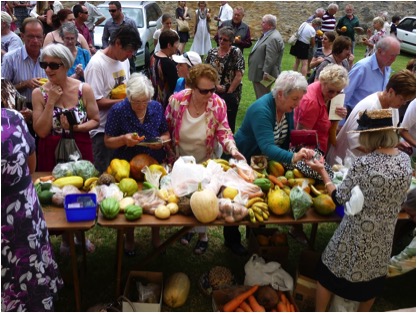
 And that’s because we’re tapping into the reality that life isn’t most ultimately about us and making much of ourselves. We’re catching a glimpse of the reality that absolutely everything that we have – from our job to the air we breathe – is owing to the goodness of Another. You see, we are designed to humble ourselves in the presence of Someone infinitely more worthy than us. And we are designed to give praise and thanksgiving to Him for the comforts of this life. The pleasure we feel in thanksgiving is a parable from the God of the universe that teaches us that our glory is not the goal of our lives, but that His glory is.
 Norfolk Island Church Of England